
Beyond the Bathwater: The Alchemy of Salt, Herbs and Water
Updated: Oct 16
How to craft soothing spiritual baths using salt, herbs, intention, and the timeless symbolism of water.

There are moments when an ordinary bath simply isn't enough.
Perhaps you've experienced a difficult week, carried the weight of someone else's troubles, or felt emotionally unsettled without quite knowing why. You may long for a way to wash away more than the day's dust and perspiration.
For generations, people have turned to water, plants, and meaningful rituals during times of transition, reflection, and renewal.
A spiritual herbal bath is more than water scented with flowers. It is a deliberate act of setting aside time to honor yourself, release what feels burdensome, and welcome something different into your life.
The herbs bring their fragrance, beauty, and traditional symbolism. Salt represents cleansing, grounding, or renewal. Water becomes a symbol of transformation. Your intention gives the ritual its personal meaning.
The Ancestral Tradition of Spiritual Bathing
Long before modern bath products filled store shelves, water was woven into the spiritual and cultural practices of communities around the world.
In Indigenous Mexican cultures, ceremonial steam baths known as temazcales have long been associated with purification, renewal, and traditional healing. In Hindu traditions of India, bathing in sacred waters holds deep spiritual significance, while in Judaism, immersion in a mikveh, or ritual bath, marks purification and important transitions in religious life.
Among some Maroon communities in Suriname, a South American country with a rich African ancestral heritage, herbal bathing remains an important cultural practice associated with spiritual cleansing, protection, and ancestral traditions.
Although these traditions differ in their methods, meanings, and beliefs, each reflects a profound relationship with water and its place in spiritual life. Some incorporate plants, while others emphasize sacred waters, steam, or ritual immersion. Together, they illustrate the diverse ways communities have preserved spiritual and cultural knowledge across generations.
Within family traditions, that knowledge might be as simple as knowing which leaves to steep, when to prepare a bath, or the importance of approaching the water with a clear intention.
A grandmother might not have called it a wellness ritual. She may simply have understood that sometimes a person needed quiet, warm water, and a moment to gather themselves.
Today, we can appreciate that wisdom while honoring the cultural histories and experiences from which these practices come.
Choosing Herbs for Your Spiritual Intention
In spiritual herbal bathing, the plant you choose can become part of the meaning you give your ritual.
There are many herbs to choose from, and certain herbs have acquired symbolic associations through folklore, cultural customs, and traditional herbal practices.
Across generations and cultures, these associations have developed into a rich tapestry of meanings, allowing individuals to select herbs that resonate with their personal intentions and spiritual traditions.
Here are six botanicals you can explore.
Herb | Traditional or Symbolic Association |
Rosemary | Remembrance, protection, clarity, and purification |
Lavender | Peace, tranquility, and gentle renewal |
Rose Petals | Love, compassion, beauty, and appreciation |
Chamomile | Calm, gentleness, and emotional ease |
Lemon Balm | Comfort, joy, and a welcoming atmosphere |
Basil | Blessings, prosperity, and protection in selected traditions |
Their aromas, appearance, and symbolic associations help create an experience that reflects your intention.
For example, rosemary might appeal to someone seeking a sense of renewal after a difficult period. Rose petals might be chosen for a ritual centered on self-appreciation. The most meaningful selection is often the one that resonates with you.
The Role of Salt in Spiritual Herbal Bathing
Alongside herbs, salt has held a meaningful place in cleansing and purification rituals across various cultural and spiritual traditions.
While herbs contribute their fragrance, botanical qualities, and symbolic associations, salt is often incorporated to represent purification, protection, grounding, or release.
Combining salt and herbs can create a bathing experience that engages both the senses and personal intention.
Four Salts to Explore
Himalayan Pink Salt — Grounding and Balance
Recognized for its delicate pink color, Himalayan salt is a rock salt containing primarily sodium chloride and small amounts of other minerals.
In contemporary spiritual wellness practices, it is sometimes associated with grounding, balance, and emotional renewal.
Sea Salt — Cleansing and Renewal
Harvested through the evaporation of seawater, sea salt is widely used in bathing preparations.
In various spiritual practices, it symbolizes cleansing, purification, and the release of unwanted influences.
Dead Sea Salt — Rest and Restoration
Harvested from the mineral-rich waters of the Dead Sea, this salt differs from ordinary sea salt in its mineral composition.
It is popular in mineral bathing and spa traditions. For a personal spiritual ritual, it may symbolize restoration, renewal, and tranquility.
Epsom Salt — Relaxation and Releasing Tension
Epsom salt has long been a favorite addition to warm baths, particularly after a long day of physical activity or muscle tension.
Combined with comfortably warm water, it creates a soothing bathing experience that many people associate with easing tired muscles, relaxation, and physical comfort.
In spiritual bathing, Epsom salt can symbolize releasing accumulated stress, letting go of tension, and welcoming a renewed sense of peace and balance.

How Salt and Herbs Work Together in a Spiritual Bath
Salt and herbs bring different qualities to the bathing ritual.
The salt may represent cleansing, grounding, or release, while the herbs contribute their fragrance, appearance, and symbolic meanings.
You might combine rosemary with sea salt for a ritual centered on release, or rose petals with Himalayan pink salt for a bath devoted to self-appreciation and balance.
For a simple herbal bath, begin with:
¼ cup of your chosen bath-grade salt
¼ cup of dried herbs selected for your intention
4 cups of hot water
The herbs are first prepared as an infusion, while the salt is dissolved separately in the bathwater.
The following sections explain how to bring these ingredients together into a meaningful bathing ritual.
Herbal Wisdom: The beauty of combining salt and herbs lies in the intention behind the preparation. Each ingredient contributes its own symbolism, allowing you to create a ritual that feels personally meaningful.
Preparing the Space: Before the Water Begins to Flow
A spiritual bath begins before you step into the water.
The preparation itself can be part of the experience.
Start by giving your bathing space a little attention. Clear away unnecessary clutter. Set out a clean towel, prepare your herbs, and arrange anything that makes the environment feel welcoming and relaxing.
You might choose soft music to create a peaceful atmosphere, or perhaps the gentle glow of candlelight accompanied by the soothing stillness of silence.
Next, decide what the bath represents.
Are you preparing to release emotional heaviness? Welcome peace? Restore a sense of personal confidence? Celebrate a new beginning?
You might express your intention with a simple statement:
“I release what I no longer need to carry.”
Or perhaps:
“I welcome peace, clarity, and a renewed sense of balance.”
There is no perfect wording. What matters is that the intention feels authentic to you.
Making a Basic Herbal Bath Infusion
Before exploring the three rituals below, it helps to understand how to prepare the herbs.
Rather than scattering handfuls of plant material directly into the bathtub, make a concentrated herbal infusion.
Basic Ingredients
¼ cup dried herbs or flowers
4 cups hot water
¼ cup of your chosen bath salt (optional)
Directions
Place the dried herbs in a heat-safe container.
Pour 4 cups of hot water over them.
Cover and steep for approximately 15–20 minutes.
Strain the herbal infusion through a fine-mesh strainer or cheesecloth.
Dissolve the salt, if using, in comfortably warm bathwater.
Pour the strained herbal infusion into the bathtub and gently stir to combine.
Alternative Method: Place the dried herbs in a tightly secured, reusable muslin or cotton drawstring bag and allow them to infuse directly in the warm bathwater. This helps keep loose plant material out of the tub and prevents herbs from collecting in the drain.
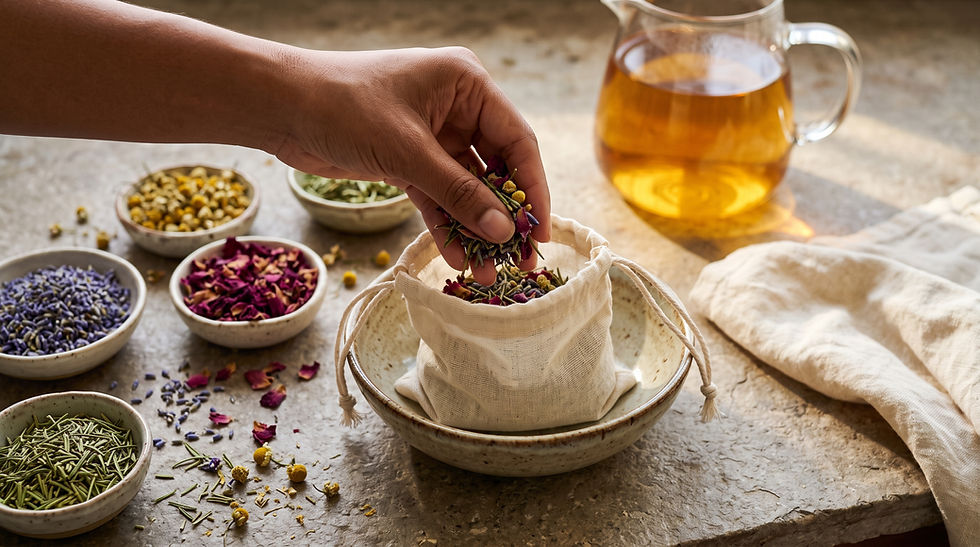
Now comes the personal part: choosing the experience you wish to create.
Three Spiritual Herbal Baths for Different Intentions
Each of the following baths is designed around a particular theme. These are accessible, contemporary rituals inspired by the broader tradition of meaningful botanical bathing.
Bath One: The Ritual of Release
For letting go of emotional heaviness and welcoming a fresh beginning
Sometimes we carry the memory of an uncomfortable conversation, a disappointing experience, or a difficult season longer than we realize.
A release bath creates a quiet opportunity to acknowledge those feelings and consciously decide what you are ready to leave behind.
Featured Herbs: Rosemary and Lavender
Rosemary brings its fresh, herbaceous fragrance and symbolism of remembrance and purification. Lavender adds a soft floral scent traditionally associated with peaceful surroundings.
Ingredients
2 tablespoons dried rosemary
2 tablespoons dried lavender
¼ cup sea salt (optional)
4 cups hot water
Directions
Combine the rosemary and lavender in a heat-safe container.
Pour in the hot water.
Cover and steep for 15–20 minutes.
Strain thoroughly.
Dissolve the sea salt, if using, in comfortably warm bathwater.
Add the strained herbal infusion and gently stir.
The Ritual
Before entering the bath, think about something you are ready to release.
It might be a lingering disappointment, a stressful encounter, or an expectation that no longer serves you.
As you settle into the water, notice its warmth and the fragrance of the herbs.
Allow yourself a few quiet moments.
You may choose to repeat:
“I acknowledge what has been. I release what no longer belongs in my present.”
Imagine the experience of setting down a heavy bag after carrying it for a long distance.
You are honoring what you've experienced while choosing how much of its weight you wish to continue carrying.
When the bath is complete, drain the water and consider that simple action a symbolic ending.
Herbal Wisdom: In a personal release ritual, rosemary's association with remembrance offers an interesting contrast: we can remember an experience without continuing to carry its emotional weight.
Bath Two: The Ritual of Peace and Renewal
For creating a quiet space when life feels overwhelming.
Some spiritual baths are about releasing what weighs heavily upon us. Others are about welcoming something into our lives.
Peace. Stillness. Patience. A moment of connection with yourself.
This bath focuses on creating a gentle, peaceful atmosphere through fragrant botanicals.
Featured Herbs: Chamomile and Lemon Balm
Chamomile has long been associated with relaxation and comfort. Lemon balm brings a fresh, lemony aroma and a traditional association with emotional ease.
Ingredients
2 tablespoons dried chamomile flowers
2 tablespoons dried lemon balm
¼ cup Epsom salt (optional)
4 cups hot water
Directions
Place the herbs in a heat-safe container.
Pour hot water over them.
Cover and steep for 15 minutes.
Strain the herbs.
Dissolve the Epsom salt, if using, in comfortably warm bathwater.
Add the herbal infusion and gently stir.
The Ritual
Begin by allowing the space around you to become quiet. As you enter the bath, focus on the sensation of the warm water.
Notice the gentle botanical fragrance.
Instead of thinking about everything you need to accomplish tomorrow, give your attention to the present moment.
You might quietly affirm:
“In this moment, I welcome peace. I allow myself to rest and renew.”
Give yourself permission to enjoy this peaceful interval.
The purpose is simply to create a meaningful pause.
Herbal Wisdom: The aromatic qualities of chamomile and lemon balm make them appealing companions for quiet evening rituals, whether prepared as herbal infusions or incorporated into bathing traditions.

Bath Three: The Ritual of Self-Love and Appreciation
For reconnecting with your worth and honoring the person you've become
Life has a way of keeping us busy caring for everyone and everything around us.
Responsibilities accumulate. Expectations grow. Personal needs are sometimes pushed aside.
A self-appreciation bath offers an opportunity to turn some of that attention inward.
It is an act of recognition and appreciation for the person you are and the journey that brought you here.
You, too, deserve moments of care.
Featured Herbs: Rose Petals and Lavender
Rose petals have long symbolized love, beauty, and affection. Lavender brings a gentle floral fragrance associated with tranquility.
Together, they create a beautifully aromatic botanical bath.
Ingredients
3 tablespoons dried, unsprayed rose petals
1 tablespoon dried lavender
¼ cup Himalayan pink salt (optional)
4 cups hot water
Directions
Combine the rose petals and lavender.
Cover with hot water.
Steep for 15–20 minutes.
Strain the infusion.
Dissolve the Himalayan pink salt, if using, in comfortably warm bathwater.
Add the herbal infusion and gently stir.
The Ritual
As you settle into the bath, consider the many things your body and mind have carried you through.
Think about the challenges you've navigated, the lessons you've learned, and the moments when you found strength you didn't know you possessed.
Rather than focusing on what you believe you should have accomplished, acknowledge what you have already survived and achieved.
You might say:
“I honor the journey that brought me here. I am worthy of kindness, peace, and appreciation.”
Allow that statement to settle.
A spiritual bath can be meaningful simply because it reminds you to treat yourself with the same consideration you extend to others.
Herbal Wisdom: Rose petals offer more than visual beauty. Their longstanding association with affection makes them especially meaningful in rituals centered on gratitude, appreciation, and personal renewal.
No Bathtub? Create a Spiritual Herbal Shower
A shower can provide the same opportunity for intention, reflection, and renewal.
Prepare any of the herbal infusions described above and allow the strained liquid to cool to a comfortable temperature.
After showering normally, slowly pour the infusion over your shoulders and body, avoiding your eyes and face.
As the water flows, focus on the intention you've chosen. You might imagine the water representing the beginning of a new chapter or a moment of personal renewal.
If you prefer, apply the infusion using a clean washcloth instead. The meaning of the ritual comes from the attention and intention you bring to it.
Closing the Ritual: What Happens After the Bath?
The final moments of a spiritual bath deserve as much attention as the preparation.
After bathing, gently pat your skin dry and put on comfortable clothing.
Give yourself a few moments before returning to your regular activities.
You might sit quietly with a cup of herbal tea, write in a journal, or simply enjoy the feeling of having made time for yourself.
Consider these three reflection questions:
What was I hoping to release or welcome?
What did I notice about my thoughts or emotions during the ritual?
What small action can I take to carry this intention into tomorrow?
That final question is especially important.
If your intention was peace, perhaps your next action is to create a little more quiet in your schedule.
If your intention was release, perhaps it means setting a boundary you've been postponing.
If your intention was self-appreciation, perhaps it means allowing yourself the same kindness you offer others. A meaningful ritual can become a reminder to act on what matters to you.
A Few Thoughts on Preparing Herbal Baths
Keep the experience simple and enjoyable. Whole dried herbs prepared as infusions provide lovely botanical aromas, allowing the natural fragrances of the plants to become part of the bathing experience.
A warm, soothing soak can be especially enjoyable as part of an evening routine, creating a peaceful opportunity to unwind and reconnect with yourself.
The purpose is to create a meaningful experience of personal care, relaxation, and reflection.
Beyond the Bathwater: Returning to the Wisdom of Intention
Water has always been more than a household necessity. Across cultures and generations, people have looked to it as a symbol of life, cleansing, transition, and renewal.
Plants and salts have accompanied many of those traditions, contributing fragrance, texture, beauty, and meanings shaped by the communities that worked with them.
Today, a spiritual herbal bath offers a personal way to reconnect with that appreciation for water, plants, and intentional living.
Each person can bring their own understanding, traditions, and personal experiences into the practice. Choose your herbs. Select your salt. Prepare your water. Set your intention. Then allow yourself a few peaceful moments to reflect, release, or welcome whatever matters most to you.
Sometimes the most meaningful part of a spiritual bath isn't what we place in the water.
It's what we choose to carry with us when we step out.
Root N Rhythm Herbal
Where Roots Meet Rhythm.


Comments